CONTENTS OF MODULE I-A (Manual Therapy of The Vertebral Column and Pelvic Complex)
Introduction: 8 Hrs
Eras of development in Physiotherapy, Introduction to Manual Therapy (Different Schools of Thought), Manual Therapy: Definitions, Indications and Contraindications, Biomechanical Principles in Manual Therapy (Fryette's Laws, Concave-Convex rule, Close pack and Loose pack Positions, Joint status gradings), Barrier concepts, Assessment of dominant eye. |
|
Cervical Region Manual Therapy Examination and Treatment: 8 Hrs :
Principles of Subjective Examination, Clinical Reasoning and Physical Examination for Cervical Region, VBI Testings, Passive Physiological Intervertebral Movements (PPIVM's), Passive Accessory Intervertebral Movements (PAIVM's) and Combined Movements in Cervical region. Manipulative Techniques for Cervical Region.
|
|
Thoracic Region Manual Therapy Examination and Treatment: 6 Hrs :
Principles of Subjective Examination, Clinical Reasoning and Physical Examination for Thoracic Region, Passive Physiological Intervertebral Movements (PPIVM's) and Passive Accessory Intervertebral Movements (PAIVM's) in Thoracic region. Manipulative techniques for Thoracic Region.
Lumbo-Pelvic Complex Manual Therapy Examination and Treatment: 10 Hrs :
Examination of the Lumbo-Pelvic Complex with thorough Clinical Reasoning Process, Form closure and force closure concepts, Assessment and Treatment of Innominate dysfunctions, Sacral rotation dysfunctions and Pubic symphysis dysfunctions based on Clinical reasoning and evidence based practice.
CONTENTS OF MODULE I-B (Manual Therapy of The Peripheral Joints, Neural Tissue and Temporomandibular Joint)
Introduction: 3 Hrs :
Eras of development in Physiotherapy, Introduction to Manual Therapy (Different Schools of Thought), Manual Therapy: Definitions, Indications and contraindications, Biomechanical Principles in Manual Therapy (Concave-Convex rule, Close pack and Loose pack Positions, Joint status grading), Barrier concepts, Maitland Grades of movement, Assessment of dominant eye. |
|
Upper Extremity Manual Therapy Examination and Treatment: 10 Hrs :
Principles of Subjective Examination, Clinical Reasoning and Physical Examination (Passive Physiological Movements and Passive Accessory Movements) for Shoulder complex, Elbow, Wrist and Hand complex. Mobilisation and Manipulation techniques for Acromioclavicular Joint (ACJ), Sternoclavicular Joint (SCJ), Glenohumeral joint, Elbow, Wrist and Hand complex.
Lower Extremity Manual Therapy Examination and Treatment: 10 Hrs :
Principles of Subjective Examination, Clinical Reasoning and Physical Examination for Hip, Knee, Ankle and Foot. Manipulative techniques for Hip, Knee, Ankle and Foot region. Muscle Energy Technique for piriformis inhibition.
Temporomandibular Joint Examination and Treatment: 3 Hrs :
Description of Temporomandibular joint disorders (TMD's), Principles of Subjective Examination, Clinical reasoning process and Physical Examination of the TMJ. Distraction, Lateral glide, Medial glide and P-A glide for the TMJ.
Neural Tissue Manual Therapy Examination and Treatment: 6 Hrs :
Introduction to terms Neurodynamics, Pathodynamics, Mechanical Interface of neural tissue. Demonstration of Upper Limb Tension Test (ULTT), Slump Test, Lower limb tension test (LLTT). Treatment techniques for irritable disorders, non-irritable disorders, interfacing structures and adverse neural tension for Neural Tissue.
Resource Person:
Prof.Umasankar Mohanty,
B.P.T(Hons), M.P.T( Manual Therapy),
S.R.P(London),MISEP(U.S.A), M.I.A.P, F.A.G.E ,PhD
[ Trained under faculties of Loma Linda University( USA), Orthopedic Medicine International(Belgium), University of Queensland ( Australia), McConnell Institute (Australia), Chartered Society of Physiotherapy (U.K), BCOM (London)] |
|
President, Manual Therapy Foundation of India (R.)
Member, International Society of Educators in Physiotherapy( under WCPT)
International Partner, Americal Physical Therapy Association (A.P.T.A,U.S.A)
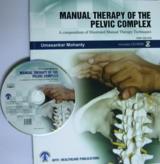
Author of the book titled “Manual Therapy of The Pelvic Complex”
Programmes conducted successfully by the resource person at Ahmedabad , Bangalore,
Bhopal,Bhubaneswar, Chennai,Coimbatore,Delhi,Dehradun,Dharwad, Faridabad, Ghaziabad,Guwahati, Hyderabad,Jalandhar,Kolkata, Latur,Ludhiana, Mangalore,
Mumbai,Nagpur,Noida,Panipat,Pune, Surat,Thrissur,Udaipur,Vadodara, Warangal,Wardha, Colombo, Dhaka, Dubai, London, Manila and Sharjah.
Contact Hours: 32 Hours (For each part)
Timings: 9.00 a.m. - 5.00 p.m. for 4 days (For each part)
Fees: Rs. 8,000/- (For each part per participant) for Indian registrants. $ 400 (For each part per participant) for Foreign registrants.
Workshop includes:
- Study Materials
- Book titled “Manual Therapy of The Pelvic Complex” by Prof.Mohanty
- Workshop Participation Certificate
- Transcript of Workshop
- 1 CD containing some important techniques
- Lunch.
No of Seats: 40 ( Max.)
Eligibility:
Physiotherapists(DPT/BPT)/ Physiotherapy Students from reputed Institutions. There is no prerequisite in terms of Manual Therapy Experience.
Venue:
The venue of the programme will be informed to the registered participants 05 days prior to the programme.
Registration:
The Registration Form can be downloaded from the website.
Payments:
You may follow any one of the following methods for registration
Method 1:The payments to be made in form of Demand Draft(DD) in favor of "Manual Therapy Foundation Of India" payable at "Mangalore". No cheques accepted.
For sending DD prepare the DD favoring “ Manual Therapy Foundation of India” payable at “Mangalore” and send to “Manual Therapy Foundation of India”, 302, 3rd Floor, Janvi Plaza, Bunts Hostel Road, Mangalore-575003, Karnataka, India.
Method 2: You may transfer from any bank in India with CBS facility using NEFT/ RTGS to our account.
You have to take the following details for transfer.
Bank Name: Bank of Maharashtra, Bharat Building, P.M.Rao Road,Mangalore-1,Karnataka, India.
Account Name: Manual Therapy Foundation of India.
Account Number: 20065016289
IFSC Code: MAHB0000381
The International registrants can transfer by using the Swift Code of Bank of Maharashtra "MAHBINBB" in addition to the details provided above.
Once you transfer your payments you may send an e-mail to info@mtfi.net with details of transaction along with the registration form downloadable from www.mtfi.nett. Along with the e-mail do sms or call to MTFI Course Co-ordinator 00-91-9901659074, 9845303805.
At the completion of the Module -I the participants will:
-
Be conversant in recent developments in anatomy, pathoanatomy and age related changes of the spinal column, pelvic complex, peripheral joints.
-
Be proficient in applying spinal column, pelvic complex, neural, muscle and peripheral joint examination procedures.
-
Be proficient in determining a differential diagnosis based on an integrated examination of the joint, muscle and neural systems.
-
Be able to formulate the most appropriate and effective treatment program suitable for the assessed condition.
-
Be proficient in applying an appropriate manual therapy treatment strategy incorporating manual treatment techniques and specific exercise.
|
|
If you are keen to organize courses or for any further queries about Courses/ Workshops of MTFI contact Course Coordinator 00-91-9901659074,9448104132, 9845303805, 9448696414,0824-4254132, 0824-6453510.
Note:
-
Each part (I A and I B) are independent programmes. It is for convenience the parts are divided. After completing both the parts the participant is eligible to appear for the Certificate course in Manipulative Therapy(C.M.T) examination.
-
Group discounts are available for group registrations. For details visit the programme schedules.
-
If there are group of 30 participants from any Institution/ City MTFI can hold the programme at the suggested place.
-
All disputes and legal proceedings are subject to the exclusive Jurisdiction of competent courts and forums in Mangalore only.
Look for your suitable place of attending Manual Therapy programme in the Program Schedules.
|